How to get over someone you never actually dated
There was no breakup, so nobody gives you permission to be sad about it. But a crush that went nowhere still takes something out of you. Here's what research says about why, and how people move past it.
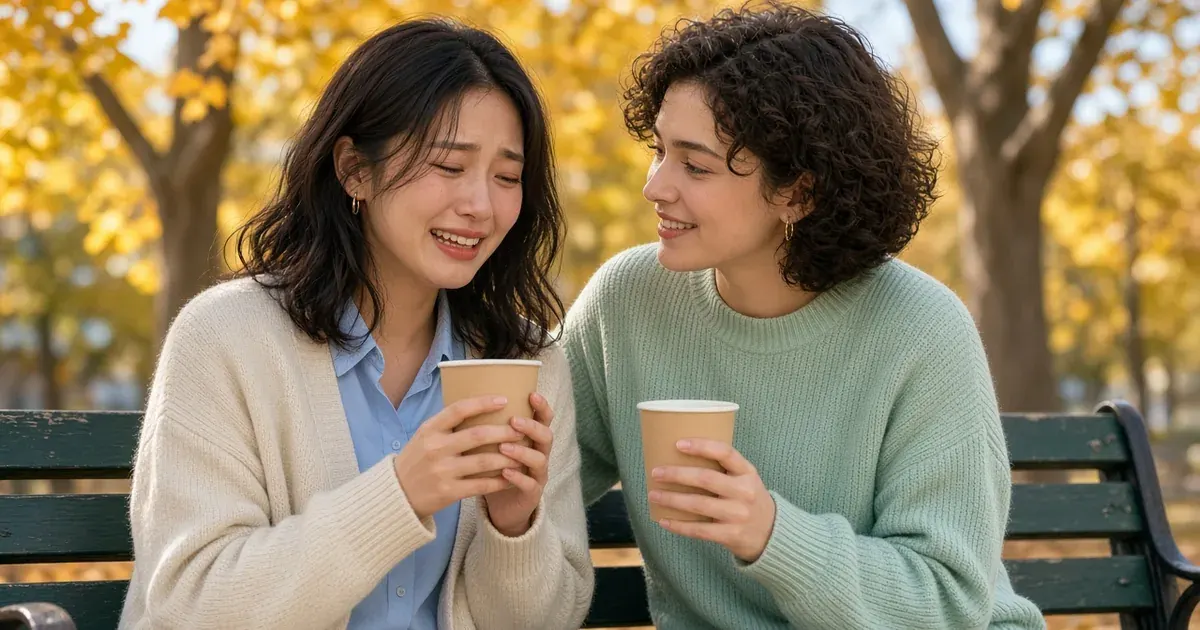
The strange thing about getting over someone you never dated is that nobody notices. No one asks how you’re holding up. There’s no “we broke up” to say. You just feel bad, and slightly embarrassed for feeling bad.
You’re in good company, though.
How common is this?
Very. In a set of studies published in 2013, Robert Bringle and colleagues found that over a two-year period, people reported unrequited love roughly four times as often as love that was returned equally.1 They sorted it into five types: a crush on someone unavailable, a crush on someone nearby, actively pursuing someone, longing for a past partner, and a relationship where one person loves more.
Those one-sided experiences scored lower than mutual love on passion and commitment. They scored higher on one thing: turmoil.1 That fits what most people report. It’s not that the feelings are bigger. It’s that they have nowhere to go.
Why it hits so hard when “nothing happened”
When Helen Fisher and colleagues scanned the brains of people who’d recently been rejected by someone they still loved, looking at that person’s photo lit up areas linked to reward and craving.2 That was a small study of 15 people, and it was about rejection by a partner, not a crush. But it’s a useful reminder that wanting someone you can’t have isn’t just a thought. It runs on the same machinery as other cravings.
There’s a cost to carrying it, too. In a 2021 questionnaire study of 148 adults, people who felt more burdened by unrequited love also reported lower self-esteem and lower life satisfaction.3 That’s a link, not proof that one caused the other. Still, it’s a reason to take this seriously instead of telling yourself it doesn’t count.
Getting over it, step by step
1. Count it as a loss. The burden findings above are a decent argument for not brushing this off.3 You lost a possibility, and that’s a real thing to lose.
2. Separate the person from the picture. Bringle’s team concluded that one-sided love is an incomplete version of the real thing, not a smaller copy of it.1 Write down what you actually know about this person and what you filled in. Seeing the two lists side by side makes the gap visible.
3. Stop collecting reminders. In a 2020 survey of 234 college students, keeping a former partner’s photos and online traces went with poorer adjustment after a breakup, and people who felt more nostalgic were more likely to keep them.5 That study was about real breakups, but muting their stories and archiving the chat is the same move on a smaller scale.
4. Decide about the friendship on purpose. If you were close before, you may want to stay friends. In a 2020 study of people who’d been on the pursuing end, those who were more committed beforehand put more effort into keeping the friendship afterward, but high distress over the rejection weakened that.4 Stepping back first and coming back later is a reasonable reading of that.
If the feelings started inside a friendship, our piece on having feelings for a friend covers whether to say something at all.
What the research doesn’t tell you
The studies above mostly asked students and adults to look back on past experiences, so they describe patterns, not timelines. None of them can tell you how many weeks this will take. What they do suggest is that one-sided love is common, it’s genuinely painful, and treating it as a real loss is a reasonable place to start.
Try it
Which of these was it?
People who talk about this
- Credentialed source
Alexandra H. Solomon
Relational self awareness, dating and building lasting relationships, drawn from her couples work and her Northwestern course.
- Credentialed source
Bella DePaulo
Research and writing on single life, including people who choose to stay single and live full lives on their own terms.
- Credentialed source
Marisa G. Franco
Friendship, loneliness and belonging, and how adults make and keep close friends.
- Credentialed source
- Trending voice
Nedra Glover Tawwab
Boundaries in relationships, family and friendship, and how to say what you need.
Further reading
Scientific American
How to Recover from Romantic Heartbreak (opens scientificamerican.com)Research-backed steps for getting through heartbreak, including why replaying the good memories slows recovery.
Sources
- The Prevalence and Nature of Unrequited Love
- Reward, Addiction, and Emotion Regulation Systems Associated With Rejection in Love
- Humorous Coping With Unrequited Love: Is Perspective Change Important?
- Unrequited love: The role of prior commitment, motivation to remain friends, and friendship maintenance
- Holding on and letting go: Memory, nostalgia, and effects of virtual possession management practices on post-breakup adjustment